
Beef
Cook SLO Pot Roast
The Sunday roast that started it all. Fall-apart beef with its own rich gravy.
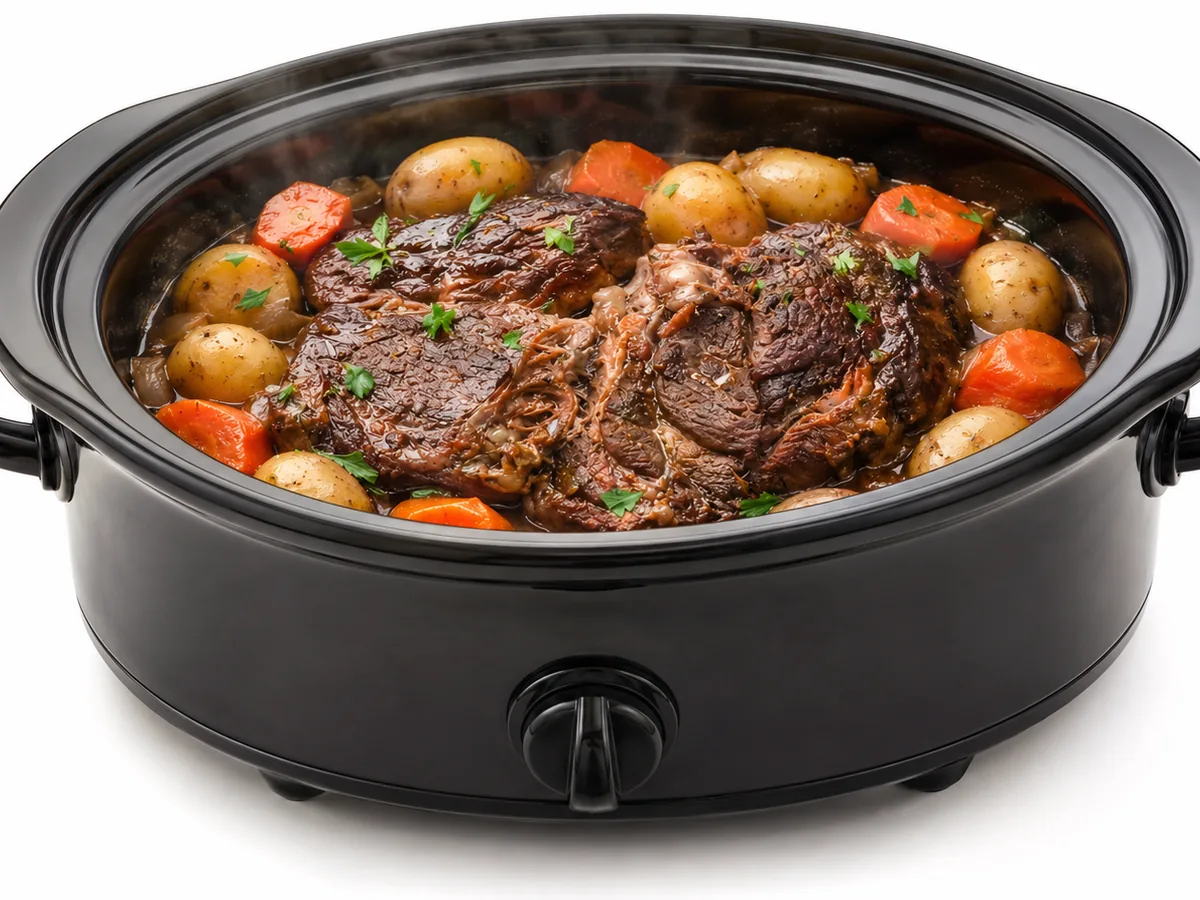
Pot roast is the dish the slow cooker was invented for. A tough, cheap cut of beef, a long low heat, and eight hours later it's something you'd serve to company.
The cut matters more here than in almost anything else we make. Chuck roast has the marbling and connective tissue that melt into gravy over a long cook. Lean roasts — round, sirloin tip, rump on the leaner end — come out dry and stringy no matter what you do.
The vegetables go in first, underneath. That's not fussiness, it's physics: vegetables cook slower than meat in a slow cooker, so they need to be closest to the heat.
Why you'll love it
The definitive slow cooker dinner.
If you own a crock pot, this is what it's for.
Makes its own gravy.
No roux, no whisking, no separate pan.
Cheap cut, expensive result.
Chuck roast is one of the least expensive cuts and it makes the best pot roast.
A whole dinner in one pot.
Beef, potatoes and carrots together.
What's already in the packet
Onion soup base and beef bouillon for depth, plus a thickener so you get gravy rather than broth.
Choose your setting
LOW · 8–9 hours
Low and slow gives collagen time to melt and flavors time to build. It is the setting this recipe was written for.
HIGH · 4–5 hours
For when you started late. It gets dinner done, but the texture is better on LOW.
Done at 195–205°F
Safe at 145°F, but pot roast doesn't fall apart until about 195°F. If it's tough, it's undercooked.
You'll Need
- 3–4 lbs Beef (pick one below)
- 2 cups Water or beef broth
- 1 packet Cook SLO Pot Roast
- 3 cups Potatoes and carrots, cut thick
Pick your beef
3–4 lbs
Chuck roast
3–4 lbs
Rump roast
3 lbs
Bottom round roast
Roasts 145°F, ground beef 160°F
Add vegetables
Baby potatoes, thick-cut carrots (fresh or frozen), sliced onion (fresh or frozen), celery chunks (fresh or frozen), whole garlic cloves and parsnips at the start, on the bottom; mushrooms at the start to melt into the sauce, or the last two hours to keep their shape; pearl onions (frozen) in the last two hours.
When to add what
| When | Add | Why |
|---|---|---|
| At the start, on the bottom | Baby potatoesThick-cut carrots (fresh or frozen)Sliced onion (fresh or frozen)Celery chunks (fresh or frozen)Whole garlic clovesParsnips | Root vegetables cook slower than meat. They belong closest to the heat, and they hold the meat up out of the liquid. Cut everything an inch and a half or larger — smaller pieces disintegrate. |
| At the start, or the last two hours | Sliced mushrooms (fresh or frozen) | Mushrooms are a choice. At the start they melt into the sauce and deepen it. In the last two hours they hold their shape and keep some bite. |
| Last two hours | Pearl onions (frozen) | Long enough to cook through, short enough to keep their shape. |
What each one does to the dish
Baby potatoes
Makes it a one-pot meal. Potatoes drink up the sauce and stretch the pot by two servings.
Thick-cut carrots (fresh or frozen)
Sweetness and colour. Cut thick or they disappear over a long cook.
Sliced onion (fresh or frozen)
Melts into the sauce and sweetens it. Worth adding even if you do not like onions, because they vanish.
Celery chunks (fresh or frozen)
A savoury base note. Barely noticeable on its own, missed when it is not there.
Sliced mushrooms (fresh or frozen)
Depth. The single biggest flavour change you can make to a savoury pot, and it makes the sauce taste like it simmered longer.
Parsnips
Sweeter and more peppery than carrot. Worth swapping in for half the carrots.
Pearl onions (frozen)
Melts into the sauce and sweetens it. Worth adding even if you do not like onions, because they vanish.
All optional. The recipe works with none of them.
Two ways to do this
If you're home
Follow the timing table above and add things when they're due.
If you're out all day
Put in at the start as normal: baby potatoes, thick-cut carrots (fresh or frozen), sliced onion (fresh or frozen), celery chunks (fresh or frozen), whole garlic cloves, parsnips and sliced mushrooms (fresh or frozen). These need the full cook anyway.
Add pearl onions (frozen) when you walk in the door. Forty-five minutes to an hour on low is enough for all of it, and it will taste better than if it had cooked all day.
If you would rather not touch it at all, put everything in at the start and use frozen where you can. It will be softer than the timing above intends and the greens will lose their colour, but it will taste good and dinner is ready when you walk in.
Frozen is the better choice for a long day. Already cut, holds its shape better than fresh over eight or nine hours, and goes in straight from the bag with no thawing. Frozen diced onion and pepper strips remove the only real prep this recipe has.
Pasta and noodles
**In the pot.** Possible but not ideal — the thickener in the packet is already working on the gravy, and pasta starch on top of it can go heavy. If you want to, add a cup of dry egg noodles and a cup of hot broth for the last twenty-five minutes. **Better separately.** Cook the noodles on the stove and pour the beef and gravy over them.
Before anything goes in the pot
- 1
Brown the meat first
Pat it dry, get a heavy pan properly hot, and work in two batches so nothing steams. Two to three minutes a side. You want colour, not doneness — the crock pot finishes it.
- 2
Deglaze the pan and pour it in
This is the step almost everyone skips, and it wastes half the benefit of browning. Most of the flavour you just made is stuck to the pan. Pour a cup of the recipe's water into the hot empty pan, scrape everything loose with a wooden spoon while it bubbles, and pour that into the crock pot. Count it toward the total liquid.
These happen outside the crock pot, before it's switched on.
Tonight's Plan
- 1
Sear the roast on every side in a hot pan until deeply browned.
Ten minutes of work. The crust survives nine hours and the fond becomes the gravy — pot roast without it tastes flat and greyish.
- 2
Put the potatoes, carrots, celery and onion in the pot, then the roast on top.
Vegetables underneath. The USDA recommends it for even cooking, and it holds the roast up out of the liquid.
- 3
Deglaze the pan with some of the broth and pour everything in.
Scrape while it bubbles. That brown layer in the pan is the difference between good gravy and brown water.
- 4
Set a reminder if you are adding late vegetables.
The table above says when each one goes in. Most are in the last forty-five minutes, so one reminder covers them.
- 5
Sprinkle the packet over and put the lid on.
Nine hours on LOW. Do not lift the lid — every look costs about twenty minutes and there is nothing to see.
- 6
Cook to 190–200°F, not 145.
Safe at 145, tender at 200. Chuck is full of collagen and it needs the time to break down.
Vegetables
Take the beef out, rest it 10 minutes, then pull it apart with two forks.
It should come apart with almost no pressure. If it doesn't, it needs another hour.
Stir the liquid in the pot until it thickens into gravy, then spoon it over everything.
The thickener needs agitation to do its job.
Stirring
Leave the lid on
Nothing in this one settles or scorches, and there is plenty of liquid moving. Every lift of the lid drops the temperature ten to fifteen degrees and costs about twenty minutes. There is nothing to check.
Swaps and add-ins
Add mushrooms.
A pound, quartered, at the start. Deepens the gravy considerably.
Add a splash of red wine.
Half a cup replacing some of the broth. Classic and worth it.
Add a bay leaf and fresh thyme.
On top of what's in the packet. More aromatic.
Make it a French onion pot roast.
Two whole sliced onions on the bottom instead of one.
Tips for success
- Chuck roast, not a lean cut. This is the single decision that determines whether your pot roast is tender or stringy.
- Cut the vegetables big. Inch-and-a-half minimum. Small pieces turn to mush over nine hours.
- If it's not falling apart, it isn't done. Undercooked pot roast is tough. Give it another hour rather than serving it early.
- Drop in a liner before anything else. Smooth it against the sides and fold the edges over the rim. When you're done, lift it out and throw it away — the crock never needs scrubbing.
Finish it right
Fresh chopped parsley.
This is a brown dish on a brown plate. Green changes how the whole thing reads.
A splash of red wine vinegar in the gravy.
A teaspoon. It sharpens nine hours of flat savory flavor instantly.
Flaky salt and cracked pepper at the table.
Let people finish their own plate.
Serve it over
Tomorrow night
Hot beef sandwiches.
On white bread with gravy poured over. Open-faced, diner style.
Beef and vegetable soup.
Add broth and barley, simmer 30 minutes.
Shepherd's pie.
Chopped, topped with mashed potato, baked until browned.
Beef hash.
Fried with the potatoes until crisp, egg on top.
Keeping it
Fridge
Airtight, up to 4 days.
Freezer
3 months. The gravy freezes better than the potatoes.
Reheating
Low with a splash of broth. Beef dries out quickly at high heat.
Questions people ask
Recipe card
Cook SLO Pot Roast
You'll Need
- 3–4 lbs Beef (pick one below)
- 2 cups Water or beef broth
- 1 packet Cook SLO Pot Roast
- 3 cups Potatoes and carrots, cut thick
Tonight's Plan
- Sear the roast on every side in a hot pan until deeply browned.
- Put the potatoes, carrots, celery and onion in the pot, then the roast on top.
- Deglaze the pan with some of the broth and pour everything in.
- Set a reminder if you are adding late vegetables.
- Sprinkle the packet over and put the lid on.
- Cook to 190–200°F, not 145.
No major allergens declared.
More from the beef line
Beef
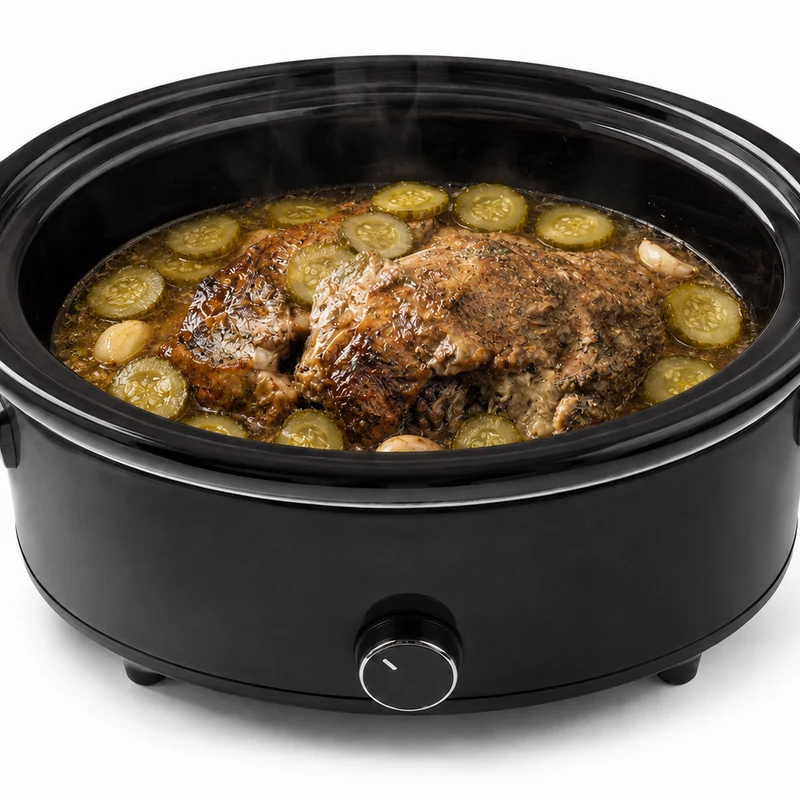
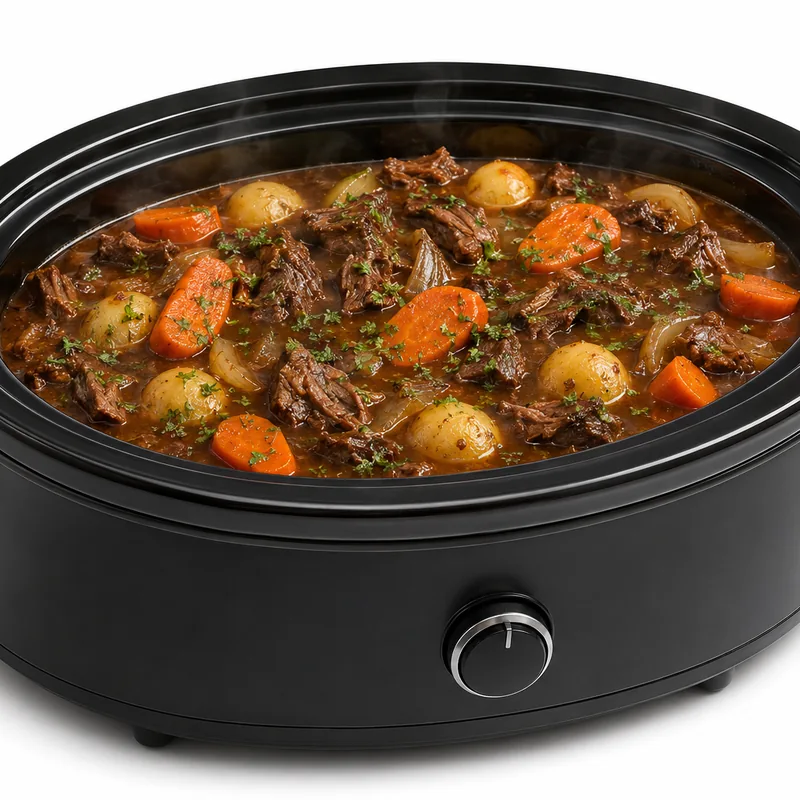
NoneDillstorm Pot Roast
Creamy, tangy dill gravy over tender beef. Not your grandmother's pot roast.
Beef
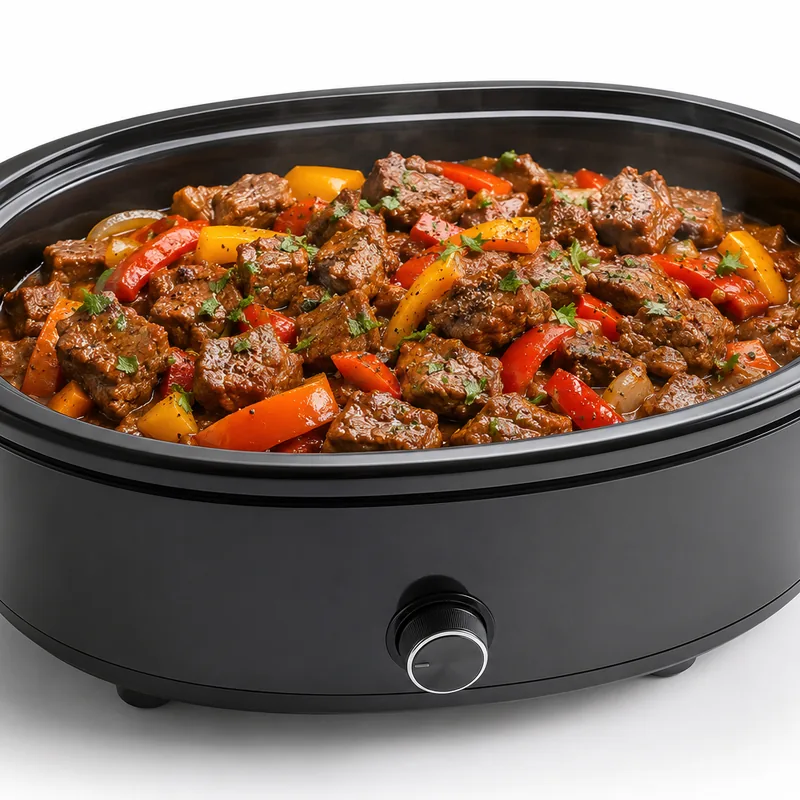
Mild ≤6hPepper Steak
Peppery strips of beef with sweet bell peppers. Ready faster than a roast.
Reviews
Sign in to rate this recipe and leave a review.